

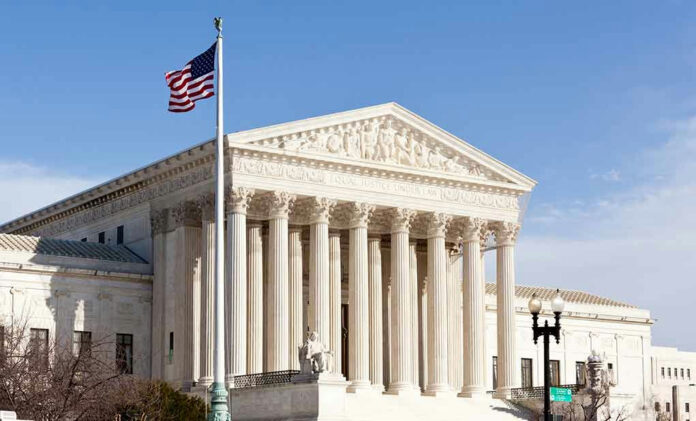
The Supreme Court’s 6-3 ruling cemented birthright citizenship and instantly ignited a new partisan fight over expanding the Court.
Story Snapshot
- The Court struck down President Trump’s order and affirmed birthright citizenship under the Constitution.
- Democratic leaders praised the ruling and signaled support for expanding the Supreme Court.
- Three conservative justices dissented; Justice Brett Kavanaugh agreed only in part.
- No concrete Democratic bill to add justices has been released in 2026, limiting near-term action.
What The Court Decided And Why It Matters
On June 30, 2026, the Supreme Court ruled 6-3 in Trump v. Barbara that the Fourteenth Amendment guarantees citizenship to almost all children born in the United States. The Court rejected President Trump’s executive order that tried to narrow who gets citizenship at birth. The majority cited the Citizenship Clause and past cases to support the long-standing rule of citizenship by birth on U.S. soil. This decision affects families, schools, and employers by keeping a clear national rule.
Justice Brett Kavanaugh agreed that current federal law grants citizenship but did not join the full reasoning of the majority. Justices Clarence Thomas, Samuel Alito, and Neil Gorsuch dissented and argued the Constitution does not mandate such a broad rule. Their separate writings show deep disagreement over the meaning of the phrase “subject to the jurisdiction” in the Fourteenth Amendment. That split signals future legal fights, even if the main rule now stands as binding law.
How Leaders On Both Sides Responded
Democratic leaders framed the decision as a clear win for constitutional rights. House Leader Hakeem Jeffries said people born here are citizens without doubt. Senate Leader Chuck Schumer said the Court stood firm despite pressure. Senator Elizabeth Warren noted even a Court with many Trump appointees upheld birthright citizenship. These reactions came within hours and set the tone for a broader push to change the Court itself.
Republican leaders and conservative groups condemned the ruling and backed the dissents. The Trump administration had argued the Citizenship Clause was meant for freed slaves, not children of people here unlawfully. That view said “subject to the jurisdiction” requires lawful permanent ties. The government’s brief laid out that historical case, which the majority rejected but the dissenters embraced as the better reading. This clash reflects long-running divides on immigration and constitutional text.
The New Push To Expand The Court, And Its Roadblocks
After the ruling, some Democrats renewed calls to add seats to the Supreme Court. They argue the Court has become too political and needs rebalancing. Recent history shows similar efforts. In 2023, Democrats in Congress proposed adding four justices to make a thirteen-member Court. That bill did not advance, but it set a template for today’s rhetoric and goals. The pattern fits a cycle where reform ideas surge after high-stakes losses or wins.
CURRENT NEWS REPORT — TUESDAY, JUNE 30, 2026
1. SUPREME COURT UPHOLDS BIRTHRIGHT CITIZENSHIP
The U.S. Supreme Court ruled today that President Donald Trump’s executive order restricting birthright citizenship cannot stand.
The ruling was 6–3.
The order would have denied… pic.twitter.com/ib5uzxsLCH
— Ernie Milleur (@ErnieMilleur) July 1, 2026
Despite the loud talk, Democrats have not released a detailed new bill in 2026 that names how many justices to add or how to do it. With Republicans holding both chambers, any expansion bill would face steep odds. Even some reform advocates prefer other steps, like term limits or clearer ethics rules, instead of changing the number of justices. The lack of text and votes suggests the expansion push is more a message to their base than a near-term plan.
Why This Fight Resonates Beyond Immigration
Many Americans across parties see a system that protects insiders and leaves working families behind. Court fights tap that anger. Conservatives worry about judges overriding elected lawmakers and fueling illegal immigration. Liberals worry about a Court they view as out of touch and too friendly to powerful interests. This ruling kept a long-standing rule in place, but it did not calm the larger fear that elites, not citizens, set the rules in Washington. The trust gap remains wide.
For now, the legal bottom line is firm. Children born on U.S. soil remain citizens at birth. The policy bottom line is murkier. Congress could try to legislate around parts of the decision, but any change would face challenges in the courts and the public square. The expansion debate will keep running on cable news and social media. Until leaders draft clear bills and build coalitions, it will remain talk, not law, while the Court’s ruling guides real lives each day.
Sources:
twitchy.com, npr.org, constitutioncenter.org, bbc.com, aclu.org, law.cornell.edu, theusconstitution.org