

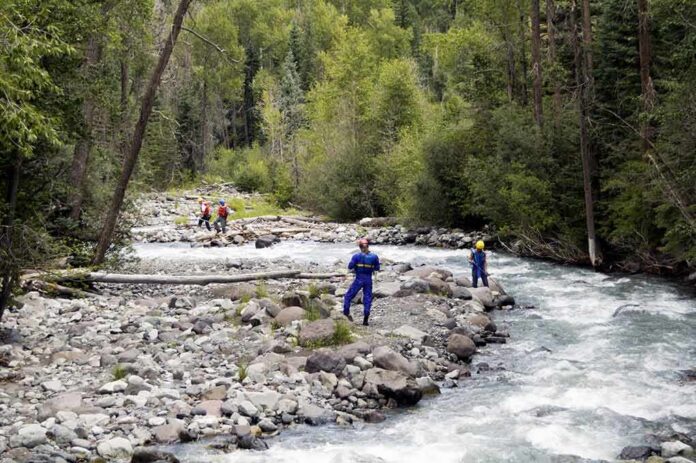
Five people drowned in the Scioto River after a simple summer outing turned into a deadly chain of rescues that no one was trained to make.
Story Snapshot
- Five adults died in the Scioto River near Columbus after trying to rescue a struggling swimmer.
- A frightened 10-year-old running for help alerted a passing driver, who called 911.
- Two young children from the group are now in the custody of family services, highlighting wider safety and system concerns.
- Confused early reporting and “Ohio River” headlines show how fast-breaking news can blur facts in a real tragedy.
How a Summer Night Turned Into a Mass Drowning
On Sunday evening, a group gathered along the Scioto River in Powell, Ohio, just northwest of Columbus, to enjoy a summer night that included some fishing and at least one person going in for a swim. Delaware County Sheriff Jeffrey Balzer said one member of the group entered the river to swim and quickly began to struggle in the water. Several others then went in to help, but they also began to have trouble, turning one emergency into many in a matter of moments.
Rescue crews were called in after the crisis was discovered, and they searched the river into the night. On Sunday, teams recovered two women from the water; both were taken to local hospitals, where doctors pronounced them dead. The search continued into Monday. Delaware County Sheriff’s Office spokesperson Tracy Whited later confirmed that divers found the bodies of three men in the river, bringing the total number of confirmed dead to five adults from the original group.
The Child Who Ran for Help and the Two Kids Left Behind
Authorities first learned something was wrong when a passing motorist saw a terrified 10-year-old running along a nearby road and flagged the child down. The driver called 911, which brought deputies and rescue crews to the Scioto River scene. Sheriff Balzer later said that two children under age ten, reported as six and seven years old, were part of the group and have now been placed in the custody of county family services while investigators sort out what happened and who their guardians are.
Sheriff Balzer explained that it appears there were roughly two sets of parents, two children, and at least one other adult involved in the outing, but he stressed that officials are still confirming exact family relationships. None of the victims’ names have been released, in part because authorities are still notifying relatives and verifying identities, which leaves the public mourning five lives without yet knowing who they were. For many readers, the most haunting detail is that a child had to run alone for help while watching their “family in the river,” underscoring how quickly everyday fun can turn into trauma.
Dangerous River Conditions and Why Well-Meaning Rescuers Often Die
Officials and safety experts note that the Scioto River can look calm from the bank yet still carry strong currents, drop-offs, and unseen hazards that trap swimmers who are not prepared. Research on rescue-related drownings across the United States shows that at least 237 bystanders have died while trying to save others, with most victims being men and many under age 25, proving that untrained rescue attempts are a major cause of chain drowning events. Studies of river deaths also find that most fatalities happen at moderate water levels during summer, when rivers appear safe but still have deadly power.
Water safety guides urge people who see a swimmer in trouble to first call for help, stay on the bank if possible, and use flotation devices or throw lines instead of jumping in without training. International life-saving groups describe a “drowning chain of survival,” which starts with preventing danger, recognizing distress early, providing flotation, removing the person from the water, and then offering medical care. This Ohio case shows what happens when that chain breaks, especially the step about sending someone to call for help instead of adding more untrained swimmers to the water.
Confused Headlines, Broken Systems, and Shared Public Frustration
News outlets rushed to report the story, and many early headlines wrongly called the site the “Ohio River” instead of the Scioto River, a separate tributary near Columbus. Some coverage framed the outing as a “fishing trip,” while other reports focused on swimming, showing how details can shift when information comes out in fragments and reporters compete for attention. Social media posts from local stations first said two people were dead and others were “unaccounted for,” before officials later confirmed all five bodies had been recovered, highlighting how real-time updates can spread half-formed facts.
Five people died while trying to rescue drowning swimmer on Ohio River https://t.co/QvCAxBNaf2
— Mybuddysully (@mybuddysully) July 20, 2026
For many Americans, this tragedy touches deep frustration with institutions that seem better at press conferences than at prevention. River safety rules, public warnings, and basic education about rescue risks are available, yet families still gather at known hazard spots with little guidance and no trained lifeguards in sight. People on both the right and the left see a pattern: government agencies can track drownings, write reports, and move children into custody after the fact, but they rarely show up earlier with simple tools and clear signs that might keep ordinary people from dying while trying to save someone they love.
Sources:
independent.co.uk, timesnownews.com, nbcnews.com, facebook.com, pmc.ncbi.nlm.nih.gov, pathologyoutlines.com, pubmed.ncbi.nlm.nih.gov, files.dnr.state.mn.us, studentaffairs.appstate.edu