
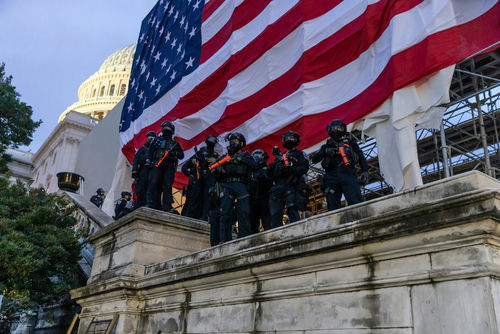
One federal judge just erased four Proud Boys’ Jan. 6 convictions because the Trump Justice Department said it was “not in the interests of justice” to keep prosecuting them, without explaining what was wrong with the original trials.
Story Snapshot
- The Trump Justice Department asked appeals courts to vacate 12 Jan. 6 seditious conspiracy convictions, including Proud Boys leaders.
- A federal judge has now granted the request in one case, wiping out four Proud Boys’ convictions and blocking any retrial on those charges.
- Prosecutors cited “prosecutorial discretion” and the “interests of justice” but pointed to no new evidence or clear legal error.
- The move deepens fears across the political spectrum that the justice system now bends for the politically connected, not for ordinary Americans.
What the Trump Justice Department Asked the Courts to Do
The U.S. Attorney’s Office in Washington, led by Jeanine Pirro, filed motions on April 14, 2026, asking the U.S. Court of Appeals for the District of Columbia Circuit to vacate 12 convictions tied to the January 6 Capitol attack. Most of these defendants were key members of the Proud Boys and Oath Keepers who had been found guilty of seditious conspiracy and related crimes after full jury trials. The motions asked the appellate court to erase the convictions and send the cases back to the trial judges so the government could dismiss the indictments “with prejudice,” meaning the same charges could never be brought again.
In the filings, prosecutors relied on a mix of statute and court rules to justify the request. They cited 28 U.S.C. § 2106 and Federal Rule of Criminal Procedure 48(a, which let courts vacate judgments and let the government dismiss cases when it claims doing so serves justice. The motions described this step as an exercise of “prosecutorial discretion,” the idea that the executive branch has broad power to decide which cases to bring, defend, or drop. The Justice Department told the court that continuing to defend these convictions on appeal was, in its view, “not in the interests of justice.”
Which Jan. 6 Defendants Were Affected
The vacatur request covered some of the highest‑profile figures from January 6, including Proud Boys leaders Ethan Nordean, Joseph Biggs, Zachary Rehl, and Dominic Pezzola, along with Oath Keepers founder Stewart Rhodes and several other members. These defendants had been convicted of seditious conspiracy, which means plotting to use force to oppose the lawful authority of the government or stop the transfer of power. Juries had heard weeks of evidence about planning, encrypted chats, and actions at the Capitol before finding them guilty beyond a reasonable doubt. All 12 had already appealed their convictions, so the cases were in the middle of normal review when the Justice Department shifted course and chose not to defend the verdicts.
Most Jan. 6 defendants had already received clemency from President Trump when he returned to office in 2025, including mass pardons and commutations that cleared or shortened sentences for about 1,270 people. But those actions had left a small group of 14 convictions in place, including several of the seditious conspiracy cases. The new motions go a step further. Instead of simply freeing these defendants from prison, the Trump administration now seeks to erase the legal findings that they engaged in a violent conspiracy against the government. That means the official record would no longer show that these leaders were judged guilty of seditious conspiracy by a jury of citizens.
How the Judge Responded and What Dismissal “With Prejudice” Means
In one key case, U.S. District Judge Timothy Kelly has already granted the Justice Department’s request and vacated the seditious conspiracy convictions against four Proud Boys. After the appellate court sent the case back, Kelly dismissed the indictment with prejudice, closing the door on any future seditious conspiracy charges against those men for their role on January 6. Reports describe Kelly’s decision as reluctant, noting that judges usually defer when the executive branch says it no longer wishes to pursue a case, even when the original conviction followed a full and fair trial.
Dismissing with prejudice matters because it does more than free people from prison. It also prevents the government from ever re‑filing those charges, even if future leaders believe the case was properly proved and should stand. In practice, that means the justice system has moved from punishing those leaders for a violent attack on Congress to treating them as though the conspiracy conviction never happened. For many Americans who watched the events of January 6 live, that feels less like mercy or fairness and more like erasing history.
“Interests of Justice” Without a Clear Explanation
What the Justice Department has not done is explain in detail why it now believes these cases should vanish. The motions do not point to any new evidence that clears the defendants, any witness recantations, or any major legal error at trial. They simply state that, in the Executive Branch’s view, it is “not in the interests of justice” to continue these prosecutions. That language mirrors how prosecutors sometimes act in rare cases when they discover serious mistakes or constitutional problems, but here the filings do not describe such flaws.
Major Jan. 6 case collapses: Federal judge grants DOJ motion to dismiss seditious conspiracy convictions against four Proud Boys members with prejudice. The ruling tosses some of the most serious criminal judgments from the… #January6 #ProudBoys #DOJhttps://t.co/RAtY6jUZ4O
— @GlobalRightWatch (@AutonomusRepost) July 11, 2026
This silence fuels frustration on both the left and the right. Many conservatives see years of aggressive prosecutions under the prior administration as proof the system was weaponized against political outsiders, yet they now watch the government quietly drop cases without offering the public a full accounting of what went wrong. Many liberals see the same move as proof that political violence is tolerated when it serves those in power, especially when leaders tied to nationalist groups get special treatment. Both sides, for different reasons, worry that justice in America now depends more on who you know than on what you did.
Why This Feeds Broader Distrust in Federal Institutions
Law experts note that prosecutors do have wide discretion to dismiss cases, even after conviction, and courts often approve these requests. But using that power after juries have already weighed the evidence, and when the government gives no clear factual or legal basis, is uncommon and highly controversial. It places huge trust in the same institutions many Americans already doubt, asking citizens to simply accept that vacating major conspiracy convictions is somehow “just” without seeing the reasoning.
For Americans who feel shut out of the “deep state,” this story fits a larger pattern. Federal officials aggressively pursue ordinary people when it serves political goals, then quietly unwind cases when those defendants are useful or aligned with the people in charge. Some see this as one more sign that the federal government is failing at its basic job: applying the law fairly, explaining its decisions openly, and protecting the Republic from violence no matter who commits it. Whether you lean left or right, the message many take away is the same — the rules are flexible for the powerful, and rigid for everyone else.
Sources:
cbsnews.com, facebook.com, democrats-judiciary.house.gov, yahoo.com, motherjones.com, abcnews.com, youtube.com