
A beloved Hollywood character actor is dead after a brutal stabbing in suburban Los Angeles, raising new questions about crime, mental health, and a justice system that still struggles to protect vulnerable seniors.
Story Snapshot
- Veteran actor James Handy, 81, was fatally stabbed outside a Tarzana home, according to police.
- Officials say the suspect is his girlfriend’s 44‑year‑old son, who later turned himself in.
- The case highlights rising concerns over urban crime and the safety of elderly Americans.
- The investigation remains in early stages, with key records still held by Los Angeles authorities.
What Police Say Happened In The Tarzana Killing
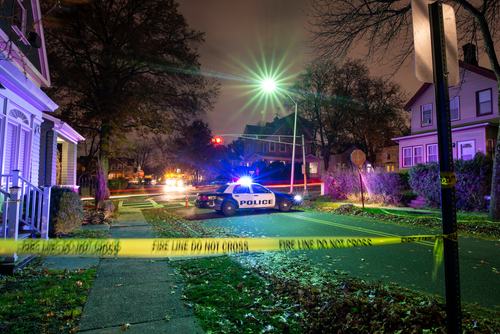
Los Angeles Police Department officials say officers were called to a home in Tarzana’s 19200 block of Erwin Street after a report of a stabbing. Responding officers found eighty‑one‑year‑old James Handy suffering from stab wounds in the front yard of the residence, according to a department murder investigation notice. Authorities state that Handy was transported to a nearby hospital, where he later died from his injuries, and detectives opened a formal homicide investigation into the attack.[1]
Local reporting identifies the suspect as forty‑four‑year‑old Michael Gledhill, whom police say lived at the residence with his mother, Handy’s longtime girlfriend.[1] According to coverage based on police statements, Gledhill allegedly called emergency dispatchers and made an incriminating statement about having killed a man before officers arrived.[3] Authorities say Gledhill later turned himself in and was arrested on suspicion of murder as detectives processed the scene and gathered early evidence from the Tarzana neighborhood.[1][3]
Who James Handy Was, And Why This Case Resonates
News outlets describe Handy as a veteran character actor with decades of work in film and television, including roles in “Top Gun: Maverick,” “Logan,” and “Jumanji.”[1][2] Reports emphasize that he was eighty‑one years old and still recognized for his steady presence in supporting roles that many viewers would remember, even if they did not know his name.[2] For many conservative Americans, his death underscores a growing sense that even seniors who have spent a lifetime working and contributing are no longer safe in major cities.[2]
Coverage based on police sources paints a picture of a domestic setting turned deadly, with the alleged attacker not a stranger in the night but a family connection who shared the home.[1][2] That detail troubles readers who see how fragile family stability can become when mental health problems, drug issues, or untreated grievances collide with a justice system often focused more on ideology than accountability.[1] While authorities have not yet released a full motive, the dynamic of an elderly man reportedly killed by a younger relative fits a broader pattern of vulnerable seniors facing serious risks.
Early Narrative, Missing Records, And Why Details Matter
Available information about Handy’s killing largely comes from the Los Angeles Police Department statement and a tight cluster of local and national outlets repeating that account.[1][2] The official murder investigation notice confirms the location, basic timeline, and that Handy died after being found with stab wounds, but it does not include a coroner report, autopsy findings, or full 911 transcripts. Reporters note that prosecutors have not yet released a detailed complaint, leaving the public to rely heavily on preliminary law‑enforcement language.[1]
Media analysts warn that such early coverage often locks in a narrative built almost entirely on police summaries before key documents become public.[1] In this case, there is still no publicly cited medical examiner file describing the exact injuries, toxicology results, or formal cause and manner of death.[1] There is also no publicly available body‑camera footage, scene photographs, or full dispatch records to independently confirm every detail of the encounter, even though those materials could eventually clarify how events unfolded on that Tarzana lawn.
Crime, Seniors, And The Bigger Public‑Safety Picture
Conservative readers watching this story unfold see it fitting into a larger pattern: an eighty‑one‑year‑old man, living in a major Democrat‑run city, dies violently in what should have been the safety of a family home.[1][2] For years they have heard promises that progressive reforms and reduced penalties would somehow make communities safer, yet high‑profile killings of seniors and public figures keep capturing headlines.[1] Many now question whether lenient policies and crowded urban conditions are eroding basic order and respect for life.
Authorities on Thursday identified the 81-year-old victim and the suspect in a fatal stabbing in a residential area of Tarzana in Los Angeles, as disturbing details emerged about a 911 call connected to the incident.
Eyewitness News has learned the victim is actor James Handy,… pic.twitter.com/dB9zPSegRY
— ABC7 News (@abc7newsbayarea) June 5, 2026
At the same time, the Handy case illustrates how difficult it can be for families to get real help before a crisis becomes deadly, especially when mental health or long‑simmering conflict may be in play.[3] Researchers and legal observers note that important answers will only come when the coroner report, charging documents, and any body‑camera footage are released and tested in court.[1] Until then, citizens concerned about crime, public safety, and respect for the elderly will be watching closely to see whether this killing is fully and fairly prosecuted.
Sources:
[1] Web – Veteran actor James Handy fatally stabbed in Tarzana by girlfriend’s …
[2] Web – Tarzana deadly stabbing suspect identified as son of victim’s …
[3] Web – Man arrested for deadly stabbing in Tarzana | FOX 11 Los Angeles