

The Federal Reserve faced its largest internal rebellion in over three decades this week when four officials openly dissented against the central bank’s monetary policy statement, marking the first time since 1992 that so many policymakers have publicly broken ranks on a single Federal Open Market Committee decision.
The Historic Split
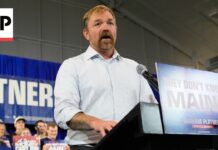
Minneapolis Fed President Neel Kashkari, Dallas Fed President Lorie Logan, and Cleveland Fed President Beth Hammack voted against the policy statement because it continued signaling the Fed’s next move would likely be an interest rate cut. The trio argued this guidance no longer reflects economic reality, particularly given rising inflation pressures from Middle East conflict and surging oil prices. Governor Stephen Miran dissented in the opposite direction, preferring an immediate quarter-point rate reduction.
The disagreement centered on language referring to the extent and timing of additional rate adjustments. Officials have held the benchmark rate steady this year at 3.5% to 3.75% after three quarter-point reductions in late 2025. The unchanged language maintains what dissenters called an inappropriate easing bias despite persistent inflation running above the Fed’s 2% target for five consecutive years.

“I keep asking anybody, at the Fed or outside of the
Middle East Conflict Fuels Uncertainty
Kashkari outlined two scenarios driven by the Middle East crisis. If the Strait of Hormuz reopens quickly, underlying inflation would likely remain around 3% for a third straight year, requiring the Fed to hold rates steady for an extended period. If conflict drags on, both inflation and unemployment could rise simultaneously. Kashkari warned this stagflation scenario might force the Fed to raise rates, even risking further labor market weakness, to prevent inflation expectations from becoming unmoored.
Cleveland’s Hammack noted the economy has remained resilient despite elevated uncertainty, but rising oil prices add broad-based inflationary pressures. She previously dissented in December 2024 against a rate cut, maintaining her hawkish stance on inflation risks. The dissent marked the first for Logan, who became Dallas Fed president in 2022, but the fifth for Kashkari, whose longest-serving regional bank president tenure has seen him shift from vocal dove to inflation hawk.
What This Means for Americans
The historic dissent reveals deep divisions within the Fed over how to balance inflation control against employment concerns. Since January, a growing number of officials have urged colleagues to acknowledge rate hikes might be necessary. The rebellion signals the central bank may be closer to raising rates than financial markets currently expect, which could impact mortgage rates, business loans, and consumer credit costs. For families already squeezed by five years of above-target inflation, the prospect of higher borrowing costs adds another layer of economic uncertainty to household budgets and retirement planning.