
A twin‑engine Piper Aerostar crashed moments after takeoff near Saranac Lake, killing all three on board and triggering a federal investigation.
Story Snapshot
- Aircraft crashed in woods near Adirondack Regional Airport shortly after 10:30 p.m. Monday
- All three aboard died; investigators have not identified a cause yet
- Crash marked the second fatal Adirondacks plane accident in two days
- National Transportation Safety Board and Federal Aviation Administration opened probes
What Happened After Takeoff Near Saranac Lake
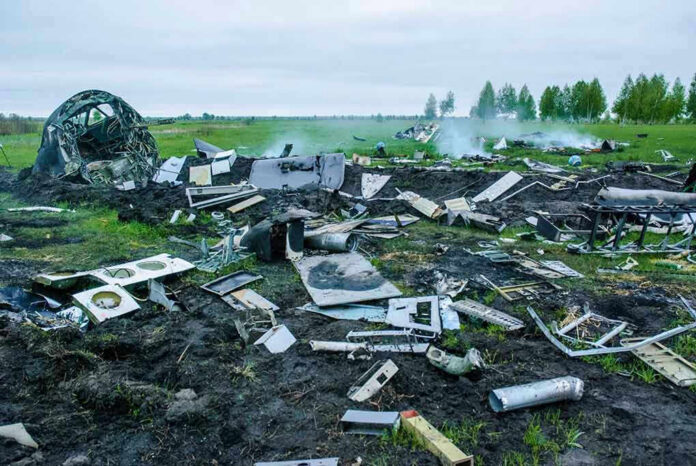
State police and federal officials said a 1976 Piper Aerostar 601P took off from Adirondack Regional Airport late Monday and crashed into nearby woods within minutes. The plane reportedly lost contact with the tower at a very low altitude and then went down, killing all three people on board. Crews found the wreckage near State Route 186 in Harrietstown, just outside Saranac Lake. Officials said the National Transportation Safety Board and the Federal Aviation Administration are leading the investigation.
Local outlets reported the crash happened shortly after 10:30 p.m., and that the wreckage burned in the impact area. Investigators have not released a cause. They began documenting the scene, securing the debris field, and collecting witness accounts. That work will feed into a preliminary report that typically arrives within weeks. A final report, which lays out probable cause, can take a year or more, depending on findings and lab analysis.
What Officials Have Confirmed — And What Remains Unknown
Officials confirmed three fatalities and identified the aircraft as a twin‑engine Aerostar 601P built in 1976. They have not publicly released the victims’ names, pending family notification. Some early reports framed the victims as spanning three generations, including a toddler, but investigators have not confirmed ages or relationships. Authorities often caution that personal details can change between early media accounts and coroner releases, so they focus first on verified facts.
The cause remains open. Investigators will examine engine condition, propeller damage, fuel samples, flight controls, maintenance records, and pilot qualifications. They will also analyze radar tracks and radio calls to see how altitude, airspeed, and climb performance compared with expected values. Weather, runway conditions, and weight and balance will be part of the review. Officials in a recent, separate New York crash noted no engine failure in preliminary findings, showing how early theories can shift with evidence.
Why This Crash Drew Extra Attention In The Adirondacks
Regional reporters noted this was the second deadly Adirondacks plane crash in two days, raising concern across small towns that depend on the airport and summer tourism. Clusters can feel alarming. Aviation safety experts often caution that timing alone does not prove a common cause. Different aircraft, pilots, weather, and maintenance histories can lead to very different outcomes. That is why each crash gets its own independent review and lab testing before conclusions are made.
The Aerostar type has a long service history in general aviation, including both routine flights and historic accidents. Investigators will compare this event with past cases only where facts line up, such as takeoff performance or engine data. Prior accidents involving similar models have ranged from engine power loss to pilot workload during climb, but those lessons matter only if the evidence here points the same way. Until then, linking patterns would be guesswork.
How Investigations Work And What Families Can Expect
The National Transportation Safety Board typically issues a short preliminary report within about two to three weeks. That document summarizes basic facts such as time, place, aircraft type, and early on‑scene observations. It does not assign blame. The full factual record then grows through interviews, teardown inspections, and lab tests on engines, fuel, and instruments. The final report names a probable cause and may include safety recommendations to prevent similar crashes.
Dr. Gabriele Jasper, family, dead after plane crash in upstate New York https://t.co/io2tFnmjnc
— Asbury Park Press (@AsburyParkPress) July 15, 2026
Families and communities often feel left in the dark during this phase. That gap is real. The process is slow by design because rushed answers can be wrong. In recent New York investigations, mechanical theories sometimes gave way to other factors once parts were examined and data reviewed. In the meantime, officials ask the public to avoid the crash area, share any photos or videos from the time of the flight, and wait for verified updates rather than rumors spread online.
Sources:
nypost.com, newyorkupstate.com, baaa-acro.com, nytimes.com, data.ntsb.gov, faa.gov