
An American jet disabling a foreign tanker in international waters to enforce a unilateral Iran blockade shows just how far Washington is now willing to go to control a vital global trade route.
Story Snapshot
- U.S. forces struck the Curaçao-flagged M/T Belma with a missile in the Gulf of Oman, disabling it as it headed toward an Iranian port.
- Central Command says the ship ignored warnings and was one of nine “non‑compliant” vessels stopped under a renewed blockade on Iran’s ports.
- The blockade, reimposed July 9, applies to all ship traffic regardless of flag and sits on uncertain legal ground in international waters.
- Critics at home and abroad say the strikes breach a fragile ceasefire and prove the system serves elites and deepening geopolitical games, not ordinary Americans.
What Happened To The M/T Belma
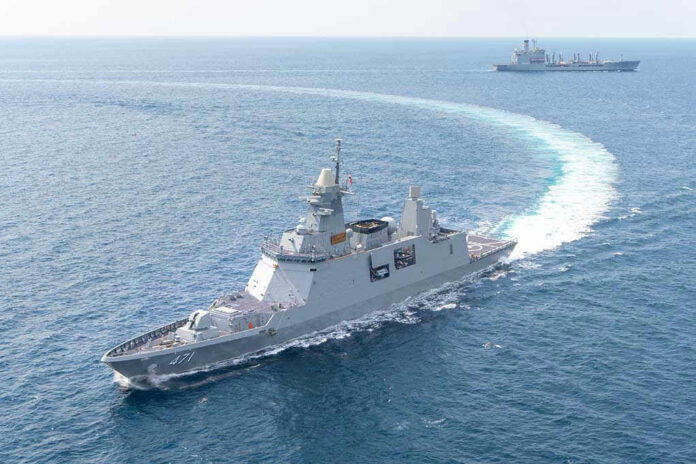
U.S. Central Command reported that one of its aircraft fired Hellfire missiles into the smokestack of the empty oil tanker M/T Belma, disabling the ship as it sailed in the Gulf of Oman toward the Iranian port of Kharg Island. The vessel was in international waters outside the Strait of Hormuz when it was hit, meaning it was not inside Iran’s territorial seas. Belma sails under a Curaçao flag, so it is not an Iranian-flagged tanker, even though it was heading to an Iranian port. CENTCOM said the ship “ignored multiple warnings” and was “no longer transiting to Iran” after the strike.
Iranian state media quickly claimed American actions killed sailors and wounded crew members, framing the strike as an attack on civilians rather than a lawful enforcement step. U.S. officials have not publicly confirmed casualties on Belma, focusing instead on the claim that the blockade must be upheld to protect other shipping from Iranian attacks. This episode fits a pattern since spring 2026 in which American forces say they warned ships, then use disabling fire when a vessel continues toward Iranian ports.
How The Iran Blockade Works And Why It Is Controversial
The United States first imposed a blockade on Iranian ports in April 2026 after Iran effectively closed the Strait of Hormuz and attacked commercial vessels, then briefly lifted it under an interim ceasefire deal. According to reporting, Washington reimposed the blockade on July 9, 2026, and announced it would apply to all ships going to or from Iranian ports, no matter what country’s flag they flew. The policy is part of a wider “America First” push to choke off Iran’s main source of money: crude oil exports that move through the strait and nearby waters.
Legal experts note that public U.S. statements do not cite a clear international legal basis, such as a United Nations Security Council resolution, to authorize this kind of peacetime blockade. That gap worries many observers because the United States is firing on foreign-flagged commercial vessels in international waters, far from a declared war zone. The blockade does allow humanitarian supplies, at least on paper, but there is no public evidence that Belma was carrying banned goods; it was unladen when struck. This lack of detail makes it hard for regular citizens to judge whether strikes are targeting real threats or simply enforcing a broad economic squeeze.
Pattern Of Strikes And Rising Ceasefire Risks
The Belma strike did not happen in isolation. Since April, the United States has disabled or seized multiple ships that it says tried to breach the blockade, including the Iranian-flagged cargo vessel Touska and tankers like Sea Star II and Hasna. Central Command has said it has disabled nine vessels and redirected more than one hundred others since the blockade began. American jets and drones have also hit dozens of Iranian military targets after Tehran’s forces attacked tankers and cargo ships in the Strait of Hormuz.
Major outlets like the Associated Press, BBC, and PBS describe these latest strikes as undermining an already fragile ceasefire between Washington and Tehran, raising the risk of a wider war. As the United States revokes oil sanctions waivers and tightens the blockade, Iran responds with more attacks on shipping and threats against U.S. bases. This tit-for-tat cycle looks less like smart defense and more like a slow grind that keeps the region on edge, drives up global energy prices, and leaves everyday Americans paying more at the pump while political and corporate elites steer the strategy.
Why This Matters For Ordinary Americans Across The Political Spectrum
For many conservative Americans, the Belma strike might look like a strong move to check a hostile regime and protect freedom of navigation, but it also raises hard questions about endless foreign entanglements. Every jet sortie, missile fired, and ship deployed costs real money and stretches a military already busy worldwide, even while Washington faces debt, inflation, and border problems at home. For many liberal Americans, firing on a foreign-flagged tanker in international waters deepens fears that the United States ignores international law and human costs while siding with oil interests and big defense contractors.
🛰 CrawlHub · Frontline · 12h Brief
Jul 15The US launched a second wave of strikes against Iran today, targeting military capabilities used to threaten vessels in the Strait of Hormuz. This follows a fourth round of strikes earlier today and Iran's claims of intercepting US… pic.twitter.com/Zzi1fXQFmg
— CrawlHub (@TheCrawlHub) July 16, 2026
On both left and right, there is growing agreement that decisions like this are made far above the pay grade of normal citizens, in a world of lawyers, admirals, and global energy traders. The government asks people to trust that warnings were given and that each ship is a real threat, yet it does not release radio logs, audio, or detailed evidence to prove those claims. That secrecy fuels belief in a “deep state” serving its own agenda, not the daily safety and prosperity of Americans who depend on stable jobs, fair fuel prices, and a peaceful world to chase the American Dream.
Sources:
nypost.com, thehill.com, nytimes.com, wsj.com, npr.org, bbc.co.uk, cnn.com, pbs.org, reuters.com, cnbc.com, washingtonpost.com, navytimes.com, studies.aljazeera.net, youtube.com