

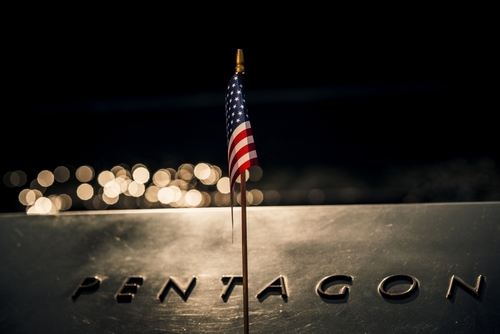
The Pentagon is now asking American automakers to transform their factories into weapons production facilities, echoing World War II’s “Arsenal of Democracy” as depleted munitions stockpiles reveal the cost of prolonged foreign conflicts.
Pentagon Seeks Industrial Mobilization for Depleted Arsenal
Senior defense officials have initiated preliminary discussions with executives from General Motors, Ford, GE Aerospace, and Oshkosh to explore redirecting commercial manufacturing capacity toward military production. The talks, reported in mid-April 2026, represent the Trump administration’s response to munitions stockpiles drained by prolonged conflicts in Ukraine and Iran. Defense officials are placing military production on a “wartime footing,” seeking rapid expansion of the defense industrial base beyond traditional contractors. This approach mirrors the World War II era when American automakers pivoted from civilian vehicles to tanks, aircraft, and munitions as part of the famed “Arsenal of Democracy” effort.
Stockpile Crisis Drives Factory Conversion Push
The Pentagon’s outreach addresses a critical national security concern: existing defense contractors cannot meet surging demand for weapons and ammunition. Years of supporting conflicts abroad have depleted U.S. military stockpiles, creating vulnerabilities that traditional defense production lines struggle to replenish quickly. The Trump administration recognizes that relying solely on established defense manufacturers limits America’s ability to sustain military readiness during extended engagements. By engaging major industrial manufacturers with existing production infrastructure, defense officials aim to bypass the lengthy process of building new defense facilities. This pragmatic strategy leverages America’s manufacturing capacity, though it raises questions about why previous administrations allowed stockpiles to reach crisis levels.
🇺🇸🔥 Pentagon Moves to Turn America’s Industrial Might into a War Machine
The Pentagon has reached out to major automakers and manufacturers to boost weapons production, according to The Wall Street Journal.
The push highlights rising urgency to scale military output as global… pic.twitter.com/Vh2OowPU8V
— War Radar (@War_Radar2) April 16, 2026
WWII Precedent Meets Modern Procurement Challenges
The proposed factory conversions evoke America’s storied industrial mobilization during World War II, when automakers temporarily abandoned car production to manufacture military equipment at unprecedented scale. However, modern regulatory frameworks present obstacles absent in the 1940s wartime economy. Current procurement rules, contracting requirements, and safety regulations complicate rapid factory pivots that were streamlined under wartime emergency powers decades ago. Defense officials must navigate these bureaucratic hurdles while assessing how quickly civilian production lines can retool for munitions manufacturing. The discussions remain exploratory, with no commitments announced, as both Pentagon leadership and corporate executives evaluate feasibility, costs, and timelines for potential conversions.
Economic and Strategic Implications for Defense Readiness
If successful, repurposing civilian factories could reshape America’s defense industrial base for sustained military production capacity. Workers in auto manufacturing may face job transitions as facilities shift output, while defense sector gains scalability previously constrained by limited contractor networks. Economically, participating companies could diversify revenue streams through government contracts, though they must weigh disruption to commercial operations. The initiative underscores a broader conservative principle: national security requires domestic industrial strength, not dependence on foreign supply chains or hollowed-out manufacturing sectors. Critics of past globalist policies point to this moment as validation that offshoring production and neglecting defense readiness leaves America vulnerable when conflicts arise.
National Security Priorities Under Trump Administration
The Pentagon’s factory conversion talks reflect the Trump administration’s commitment to rebuilding American military strength after years of perceived neglect. Placing defense production on a “wartime footing” signals recognition that global threats demand immediate action, not bureaucratic delays. For conservatives frustrated by previous administrations’ overseas commitments without adequate resource planning, this initiative represents overdue accountability. However, the need for such measures also highlights the consequences of depleted stockpiles—resources expended on foreign conflicts that many Americans question. The talks set a precedent for integrating civilian manufacturing into national defense strategy during crises, though uncertainties remain about execution timelines and which specific munitions will be prioritized as discussions progress.
Sources:
Pentagon in talks with US automakers to repurpose factories for weapons production: Report
Pentagon explores automaker role to boost weapons production
Pentagon holds talks with US automakers to boost weapons production