
Iran’s strike on a U.S. base in Jordan killed two service members, left one missing, and pushed the conflict into a new and dangerous phase.
Story Snapshot
- U.S. Central Command said two service members were killed and one was missing after the attack on Muwaffaq Salti Air Base.
- Four other U.S. service members were wounded, evacuated to Jordanian hospitals, and later discharged.
- The Islamic Revolutionary Guard Corps claimed responsibility for the strike through Iranian state media.
- Video shared by Al Jazeera appears to show the moment a missile hit the air base.
What Happened at Muwaffaq Salti Air Base
U.S. Central Command said Iranian missile and drone attacks on Muwaffaq Salti Air Base in Jordan killed two U.S. service members and left one missing. The command also said four other U.S. personnel were wounded and later discharged after treatment in Jordanian hospitals. The attack marked the first U.S. combat deaths in the region since the ceasefire between the sides collapsed, according to reporting on the strike.
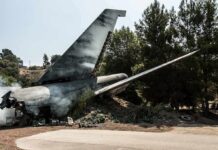
Footage circulating online added to the impact of the attack. One video published by Al Jazeera appears to show the moment an Iranian missile struck the base. That kind of visual evidence does not replace a full technical investigation, but it does help explain why the strike quickly became a major flashpoint. For many Americans, it also sharpened questions about how safe U.S. forces are at regional bases that have faced repeated attacks.
Claims, Denials, and the Missing Details
Iran’s Islamic Revolutionary Guard Corps publicly claimed responsibility for striking the U.S. base in Jordan with ballistic missiles and drones. Even so, some details remain unsettled. Reporting cites conflicting dates for the attack, and Jordanian officials initially said they intercepted missiles and saw no casualties in an earlier incident tied to the wider wave of strikes. That gap has fueled confusion over which attack caused the deaths.
The identity of the missing service member has not been publicly confirmed, and CENTCOM said remains were still being identified. There is also no publicly released forensic report or satellite analysis proving the exact origin of the missile beyond the IRGC’s own claim. That does not erase the casualties. It does mean the public record still lacks the kind of technical evidence that would settle every dispute about the strike.
Why Jordan Matters in the Wider Conflict
Jordan has become a key pressure point because it hosts U.S. forces and sits near several active fronts. Reporting says Iran has stepped up missile and drone attacks on American personnel there as part of a broader effort to deter Washington and raise the cost of U.S. involvement. That pattern fits a wider regional trend, where each strike increases the risk of retaliation, miscalculation, and deeper U.S. entanglement.
#BREAKING:🔥Alicia: “…today, we’re watching a growing death toll in the war that the president once said would be over in TWO WEEKS, but has now lasted more than TWENTY. We now know two American troops were killed by an Iranian strike on a US base in Jordan on Friday. A third… pic.twitter.com/1N191USvOc
— Emoluments Clause (@Emolclause) July 20, 2026
The political effect reaches beyond the battlefield. Washington now faces stronger pressure to answer attacks on its troops, while critics on both the left and right can point to the same basic failure: American service members remain exposed in a conflict that keeps widening. The episode also feeds a familiar public frustration, where citizens see elite decision-makers escalating a war while ordinary families absorb the costs in blood, uncertainty, and fear.
Sources:
feedpress.me, independent.co.uk, defencesecurityasia.com, airandspaceforces.com, aninews.in, tass.com