

Israel’s Netanyahu proposes ending U.S. military aid over 10 years, aligning with Trump-era America First principles but risking a vital alliance against shared threats.
Netanyahu’s Bold Proposal on CBS
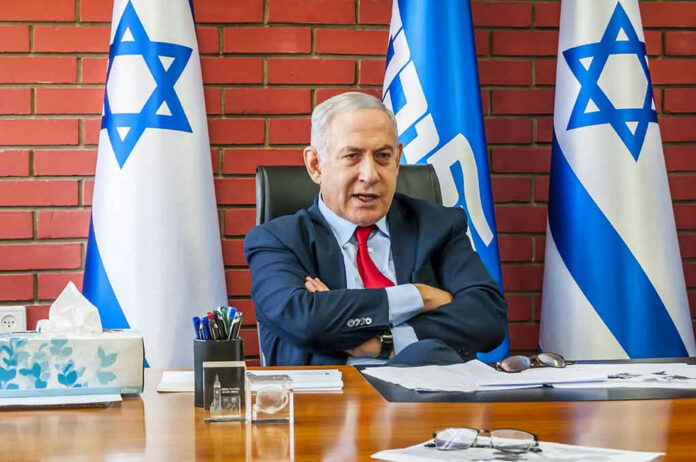
Israeli Prime Minister Benjamin Netanyahu stated on CBS “60 Minutes” on May 10, 2026, that Israel plans to wean itself off U.S. military aid over the next decade. He emphasized starting immediately to draw down the $3.8 billion annual support to zero. Netanyahu discussed the idea with President Trump, framing it as a reset in the U.S.-Israel financial relationship. This follows the 2016 Memorandum of Understanding providing $38 billion from 2018 to 2028.
Historical Context of U.S. Aid
U.S. military aid to Israel originated post-1948 as loans, converting to grants after the 1967 Six-Day War. The current MOU allocates $3.3 billion in Foreign Military Financing plus $500 million for missile defense annually. Aid represents about 16 percent of Israel’s $24 billion defense budget but requires purchases of U.S.-made weapons, supporting American jobs at firms like Lockheed and Raytheon. Israel’s GDP per capita reached $55,000 in 2025, reducing dependency.
Conservative Momentum for Change
The Heritage Foundation proposed phasing out direct aid from 2029 to 2047, increasing it temporarily to $4 billion then reducing by $250 million yearly. This transitions Israel to a strategic partner with joint programs funded at $2.25 billion annually. A YouGov poll shows 42 percent of Republicans oppose renewing the $38 billion deal, with 53 percent of those under 44 favoring its end. Support drops when taxpayer funding is specified over arms sales.
Israel plans to boost its defense budget by NIS 35 billion yearly, focusing on joint U.S. ventures rather than grants. Netanyahu’s Likud party pushed this shift last year, aligning with Trump administration priorities to curb overspending.
Netanyahu Says Israel Plans to ‘Wean Ourselves Off’ U.S. Military Aid Over Next 10 Years (VIDEO)
READ: https://t.co/DRMRFU4dZv pic.twitter.com/IruepLvlko
— The Gateway Pundit (@gatewaypundit) May 11, 2026
Impacts and Stakeholder Reactions
Phasing out aid enables U.S. savings of $40 billion per decade, redirecting funds from globalist commitments. Israel gains economic independence through $13 billion in arms exports and Gulf deals like the Abraham Accords. U.S. defense industry faces job losses, but joint developments sustain contracts. Critics warn of weakened deterrence against Iran, yet Israel’s domestic funding already covers 70 percent. Trump allies view this as victory for self-reliance.
Opposition leader Yair Lapid called the plan reckless, while experts like Jon Hoffman deem it feasible. The Trump State Department calls aid a cornerstone but reviews options pre-2028.
Sources:
Military Aid to Israel Offers Valuable Returns | Opinion by William Daroff, Newsweek
US-Israel military talks to wind down aid, focus on joint defense, Jerusalem Post
Plurality of Republicans say end US aid to Israel: poll, Responsible Statecraft