

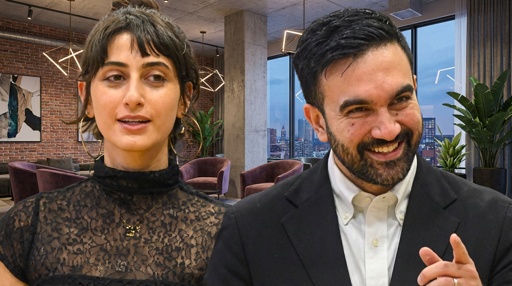
New York City’s mayor just declared democratic socialism will sweep from his city to the entire country, backing the audacious claim with a first 100 days that delivered billions in childcare funding, millions returned to exploited workers, and over 100,000 potholes filled.
From Queens Corner to City Hall: The Unlikely Rise
Zohran Mamdani started where political insiders told him democratic socialism would die: northwest Queens. The conventional wisdom said his brand of working-class politics belonged in a geographic cage, viable only among young progressives in dense urban pockets. His mayoral victory shattered that narrative, but the mid-April 2026 CBS Mornings interview revealed something more ambitious than vindication. Mamdani outlined a three-stage expansion plan: city conquered, state next, then the entire country. The working class represents America’s sole demographic majority, he argued, making politics centered on their needs universally viable regardless of zip code or cultural stereotype.
Critics have long dismissed socialism as electoral poison beyond coastal bubbles, citing resistance among rural and older voters. Mamdani flipped the script by grounding ideology in what he calls “delivery.” His administration filled 102,000 potholes and repaved 1,000 miles of roadway alongside the headline-grabbing $1.2 billion childcare deal with Governor Kathy Hochul. The message: democratic socialism fixes your street and funds your toddler’s daycare simultaneously. This dual-track approach blurs the line between mundane governance and transformative policy, forcing skeptics to reconcile pothole repairs with their preconceptions about radical politics.
The First 100 Days: Metrics That Defy Dismissal
Mamdani weaponized his honeymoon period with a barrage of measurable achievements designed to prove socialist governance works at scale. The $1.2 billion universal childcare commitment with Hochul provided economic relief to families crushed by New York’s cost of living. Landlords faced accountability for neglecting 6,070 apartments, paying $32 million to address violations that plagued working-class tenants. The administration clawed back $9.3 million from corporations that exploited small businesses and workers, redistributing it to victims. Public safety remained a parallel priority, countering the stereotype that progressives ignore crime. These weren’t abstract promises but concrete outputs tethered to dollar amounts and unit counts.
The pothole politics deserve scrutiny because they reveal strategic sophistication. Filling 102,000 potholes and repaving 1,000 miles sounds pedestrian until you recognize it as inoculation against the “socialists can’t govern” attack. Every fixed pothole becomes a small testament to competence, accumulating into a defense against electability doubts. Mamdani explicitly frames this as proving democratic socialism’s universality: if it delivers in America’s most complex city, why not statewide or nationally? The January 30, 2026 appearance with delivery app drivers in Queens reinforced his base-building approach, standing with gig workers whose exploitation he later addressed through the $9.3 million corporate restitution.
The Electability Question and Working-Class Universality
CBS host Vladimir Duthiers pressed Mamdani on socialism’s viability beyond urban strongholds, referencing polling skepticism about rural and swing-state appeal. Mamdani rejected the geographic determinism outright. His counter-argument rests on class composition: the working class dominates every region, making their interests a universal foundation rather than a niche concern. This reframes electability from cultural branding to material delivery. If voters across demographics experience relief through childcare subsidies, infrastructure repairs, and corporate accountability, the socialist label becomes secondary to results. The gamble assumes working-class identity transcends the rural-urban divide that dominates American political analysis.
Governor Hochul’s partnership on the childcare funding complicates narratives about socialist isolation. Hochul represents establishment Democratic politics, yet she collaborated on Mamdani’s signature first-100-days achievement. This suggests transactional pragmatism: deliver for constituents, build coalitions around outcomes rather than ideology. The approach echoes Bernie Sanders’ ability to win rural Vermont repeatedly while advocating policies labeled radical nationally. Mamdani positions himself as Sanders 2.0, upgrading from senator to executive and from state to city, with sights on scaling further. Whether working-class universality overcomes cultural polarization around socialism remains the central question his state and national ambitions must answer.
Expansion Blueprint or Progressive Fantasy?
Mamdani’s three-stage plan—city, state, country—assumes replicability of the New York model. The $1.2 billion childcare program and infrastructure investments required state cooperation and city resources that don’t translate automatically to other contexts. Rural states lack New York’s tax base and progressive infrastructure. Statewide races in New York involve upstate regions culturally distant from Queens, where economic anxiety mingles with resistance to urban-driven politics. National viability faces the Electoral College reality that swing states penalize candidates perceived as too far left, a lesson Democrats absorbed painfully in recent cycles. Mamdani’s confidence that delivery erases these obstacles reflects either visionary clarity or urban bubble blindness.
Mamdani: Democratic Socialist Politics 'Can Flourish Anywhere', It's Spread to Whole City, Then It'll Be State, Then Country https://t.co/2vBJJa0gfA
— TrumpIsMyPresident (@Trump_Force1) April 17, 2026
The counter-argument centers on untapped working-class majorities alienated by both parties. If Mamdani demonstrates that socialist governance improves daily life measurably, he builds proof-of-concept that resonates beyond ideological labels. The 102,000 potholes and $9.3 million in returned wages aren’t abstractions; they’re tangible improvements voters experience directly. Success depends on whether material wins override cultural signaling that socialism triggers among older, rural, and moderate voters. Democratic Socialists of America gains in local elections nationwide suggest geographic limits are softening, but mayoral governance in America’s largest city provides a test case at unprecedented scale. The next two years will reveal whether Mamdani’s expansion vision reflects sustainable political realignment or the high-water mark of urban progressive power before the backlash hits.
Sources:
Mamdani believes democratic socialism ‘can flourish anywhere’
Mamdani: Working Class Majority
Zohran Mamdani: Democratic socialism can flourish anywhere